Wednesday, 14 May 2014

My Remarks As A Guest Speaker at a HRC Event

In the line of duty as a Fellow at the Human Right’s Campaign, one of the things I appreciate about this Fellowship is some interesting opportunities I get to participate in. Mid last month, I was invited to speak at HRC’s Major Donors Dinner. Below are my remarks.

“I’m from Nairobi, Kenya, and I want to share with you a little more today about the lived experiences of LGBT people back home.

Simply put, in Kenya, and certainly most of Africa, LGBT people live largely in fear. We are isolated by the burden of stigma, discrimination and other forms of human rights violations and targeted violence.

Viewed only from our perceived sexuality or gender, this has resulted to being ostracized by family, governments, religious formations and the society at large.
Same-sex conduct is criminalized in over 35 of Africa’s 54 countries, punishable by imprisonment for years if not for life. In some places – like Mauritania and Sudan – it’s punishable by death.

However, foreign evangelical fundamentalists, especially from the United States, have lobbied – and continue to lobby governments - to tighten and enforce stricter draconian laws, even in spite of our consensual same-sex relationships already being criminalized.  
Uganda and Nigeria are now enforcing new laws that not only criminalize being LGBT, but also those who simply organize or support LGBT rights. That’s right – even our allies are not safe. Simply belonging to an organization like HRC in these countries can mean imprisonment.

The wave of clamping down on the rights of LGBT people has now spread to Kenya, Tanzania, Ethiopia and the Republic of the Congo. Other heads of states like Zimbabwe’s Robert Mugabe, and Gambia’s Yahya Jammeh, have threatened to lock up, exterminate and drive-out LGBT people out of their countries.

On the health front, LGBT people are disproportionately affected by the HIV epidemic, mostly due to the criminalization that stigmatizes our lives and hinders the provision of targeted prevention, care and treatment. Without the ability to disseminate accurate and objective information about HIV, LGBT people are being left out of public prevention and treatment policies.

Health services are being forced to silence all aspects of prevention and LGBT people do not seek medical care and treatment, as this may lead to persecution, denial or interruption of services, detention, blackmail or violence.

Just 2 weeks ago, Ugandan police raided the U.S. military-affiliated Makerere University Walter Reed HIV/AIDS clinic in Kampala – the capital city of Uganda. There they arrested the healthcare providers and ordered its closure, on allegations that it was promoting homosexuality.

Sadly, this kind of experience is a common occurrence. Similar raids continue to be reported in Zambia, Cameroon, Zimbabwe, Russia and other numerous countries around the world.

Like they do here in the United States, anti-LGBT activists have branded themselves a movement based on “traditional values.” And as you heard from my colleagues earlier today, even while there are extremists from the United States fueling these so-called traditional value movements in Africa, they are advancing a dangerous myth that being LGBT is a western agenda and influence – portraying homosexuality as a threat to humanity.

Their operations to ‘safeguard traditional values’ are usually under the protective favor of well-established conservative governments and religious institutions.

But it’s not all gloom. In fact, it’s far from it. LGBT movements in Africa are braving the odds, resilient and steadfast in our struggle for equality. Partners and allies, such as HRC, are injecting much needed support and using their strengths, to catalyze activists’ efforts.

I traveled back home to Nairobi in March, to attend the Pan Africa ILGA conference, attended by over 150 LGBT African activists. I hosted a workshop on the role of allies in advocacy on LGBT issues across Africa. I highlighted HRC’s collaboration with dedicated advocates in furthering LGBT human rights efforts. Activists across the continent expressed their interest to reach out to HRC as an ally, as discussions on a possible African regional strategy to address equality and nondiscrimination continues.

As for the HRC Fellowship, it has presented me, and Tushar Malik, the other HRC fellow from India, with a platform to speak with U.S. policy makers and coalition allies on the diverse equality movements and how best to engage international partners.

When India’s Supreme Court re-criminalized homosexuality in India in December 2013, HRC amplified Tushar’s story from the point of an Indian LGBT activist. HRC also partnered with Ugandan and Nigerian LGBT activists during organized Global Days of Action, taking part in rallies and urging the U.S. government to strongly speak up and take immediate steps to protect the lives of LGBT individuals and reverse discriminatory laws against us. 

This fellowship program is a partnership between HRC and Atlas Corps. As such, I am not only a global fellow at HRC, I am also part of the Atlas Corps –- a group of non-profit professionals from around the world who are serving as fellows in various organizations in the U.S. In my role as a member of the Atlas Corps family, my fellowship is also having impact on the future of my continent.

There are many other Fellows from African countries, some of whom have never interacted with an African LGBT activist, or met an out lesbian like myself.

One particular Fellow from Sudan reached out to me as he was intrigued by my work, and the lives of LGBT people in Africa. He wanted a fresh perspective, different from the stereotypes and myths he had learned along the way. Now, I can confidently say that he is a brave ally who is using his journalism to put the LGBT rights agenda in public domain, even in conservative Sudan.

While foes to equality continue to spread hate and support for state-sponsored homophobia, activists from Africa, the Caribbean and other parts of the world, are reaching out to HRC to support their work toward repeal of punitive, retrogressive criminalization of same-sex conduct, ending stigma, discrimination and human rights violations against sexual and gender minority persons.

I am grateful to HRC for its collaboration and its partnerships with fellow advocates across the globe. And I’m grateful to all of you. Together, we are moving toward a society in which the freedoms, rights and equality of all are guaranteed.


There is still, a lot of work to be done, many conversations to have, but there is one agenda. This is the collective tenet of our shared humanity". 

Wednesday, 19 March 2014

African Women, Arise Again

The 1995 Fourth World Conference on Women from which the Beijing Declaration came forth, was an international turning point on the participation and visibility of women worldwide. The declarations were embraced by participating governments and later ratified as best practices by others. Key among them was the determination to advance the goals of equality, development and peace for all women everywhere in the interest of all humanity.

The declaration also states “…empowerment and advancement of women, including the right to freedom of thought, conscience, religion and belief, thus contributing to the moral, ethical, spiritual and intellectual needs of women and men, individually or in community with others and thereby guaranteeing them the possibility of realizing their full potential in society and shaping their lives in accordance with their own aspirations”.

The fifty-eighth session of the Commission on the Status of Women (CSW) will took place at United Nations Headquarters in New York from 10 to 21 March 2014. Among the resolutions, was the reassertion of the Beijing Declaration. The Commission also reaffirmed that the Convention on the Elimination of All Forms of Discrimination against Women (CEDAW) and other relevant conventions and treaties, provide an international legal framework and a comprehensive set of measures for the elimination of all forms of discrimination against women and girls and promotion of substantive gender equality.

Despite these notable achievements, the visibility of the African woman in the socio-political and economic scope over the last couple of years has gone to the dogs. Women continue to face obstacles, and in some cases, dealing with retrogressive oppressive policies and law.

While some African countries continue to face serious political crisis or situations of armed conflicts, women continue to be the main targets of violence, discrimination and stigmatization. They are used as spoils of war, their very bodies turned to war themselves.

Women in positions of power lack support, sometimes ignored and their voices drowned by dissidents who deem their opinions valueless. Women, despite comprising the highest population in the world, lack conducive platforms to skew impactful policies, economically, politically and socially.  

In March 2012 Amina al-Filali who was 16 years old, was forced to marry a man who had allegedly raped her. After seven months of marriage to the 23-year-old man, she committed suicide. Her parents and a judge had forced the marriage to ‘protect the family honour’.

Article 475 of Morocco’s penal code, first proposed by the country's Islamist-led government sanctions the exoneration of a rapist if he married their victim. Needless to say, Amina’s death sparked an international outcry that made lawmakers amend the law this March.

As if on cue, Mozambique has proposed a similar kind of amendment on a bill, propagated by the majority male parliamentarians. Article 223 of the Penal Code states that a rapist can avoid prosecution for his crime by marrying his victim - even if she is a child. The amendment is to be tabled in parliament. 

The ramifications of such a law are horrific. Instead of freeing and protecting rape survivors from their attackers, the law would essentially serve them up on a silver platter. The law does not punish proven rapists, deter potential rapists, or protect survivors and other women; it actually rewards rape and punishes the victim.

Uganda passed the Anti-pornographic Law under the façade that it is aimed at eliminating “sexual crimes against women and children including rape, child molestation and incest”. This law criminalizes “dressing into cleavage-revealing blouses ('tops') that excite sexual cravings in public, unless for educational and medical purposes or during sports or cultural events”. This law, was again, drafted and propelled by male lawmakers, and the women parliamentarians did not, and have not objected to its enactment.

The list is not, cannot even be exhausted, but these are just some of the many. WHERE ARE THE WOMEN VOICES IN AFRICA? Have we again, let down our guard and retreated to the background as the gains made are trumped upon in the name of “African-ness, culture, tradition, religion”? Have we AGAIN, lost control to all aspects of our health, in particular own sexuality, our fertility, that is basic to our empowerment?

We need to draw from the determination to the full enjoyment by women of all human rights and fundamental freedoms and take effective actions against violations of these rights and freedoms. These include backward, draconian, heteronormative and patriarchal policies and laws that are persistently increasing the burden of poverty on women and creating structural barriers to our well-being.


That amendment bill in Mozambique should be scrapped to oblivion, and you can contribute to that, in your own way. Write to a lawmaker, blog, sign petitions and tell someone about it. Speak out against oppression, against bigotry, embrace self-freedom, self-thought and unapologetically live by it.

Friday, 28 February 2014

Fighting Stereotypes of Gay Kenyans


Award-winning Kenya author Binyavanga Wainaina publicly declared his homosexuality in January in response to anti-gay movements in Uganda and NigeriaAward-winning Kenya author Binyavanga Wainaina publicly declared his homosexuality in January in response to anti-gay movements in Uganda and Nigeria

This is a interview i did with Voice of America (VOA) recently.

As Kenya lawmakers consider a law further oulawing homosexual behavior and gay activism, Jane Wothaya advocates for the rights of gay, lesbian, bi-sexual and transgender (LGBT) in Nairobi and from Washington, D.C. Even as African governments outlaw homosexuality in Uganda, Nigeria and elsewhere in Africa, Wothaya joins other activists who work "not very out and open" for human rights in her homeland.

Wothaya was frustrated by the negative publicity and stigma that surrounds this minority group in the Kenya media. So she joined the Gay and Lesbian Coalition of Kenya to correct what she characterizes as wrong perceptions about Kenyans who fit that description.

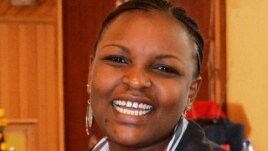
Wothaya is a lesbian who advocates for LGBT rights. She was named an Atlas Corps fellow and now works with the Human Rights Campaign on gay community issues in Washington, D.C.

Lesbian Jane Wothaya tries to change public perceptions of gay people. (Courtesy Jane Wothaya)Jane Wothaya tries to change public perceptions of gay people. (Courtesy Jane Wothaya)

Raising public awareness about gender issues is different in Kenya, she says.

“I work with a group that is relatively not very out and open in Kenya,” says Wothaya, “because while Kenya is not exactly a very conservative country, it’s a very religious country.”

Clergy contribute to the prejudice against Kenya's community


Kenya’s understanding of sexual orientation and gender identity is minimal, she says. There is a lot of prejudice based on the views of many of Kenya’s clergy and “there have been inciting statements made by politicians and a lot of misinformation and ignorance about issues related to sexual orientation and gender identity,” Wothaya says.

But it was social media and the mainstream press, radio and television that frustrated her the most. “For example, we had radio stations that did call-in sessions where people would call and talk about the Gay and Lesbian Coalition of Kenya as though it is the devil or something.

“And this was the kind of information that they were passing to their teenagers who were struggling to just get to know who they were and getting to discover what they were.”

Custom and tradition have perpetuated the problems for the gay community of Kenya. Wothaya describes “the issue of living in a patriarchal society where gender role and gender norms are passed on for years and years and so the prejudices and ignorance continue.”


Wothaya and her coalition colleagues engage the Kenyan community in public discussions on gender identity and sexual orientation. They raise sensitivity and awareness to allow the public to better understand and accept gay people.

The educational process is designed to get people to understand “that people don’t walk around with labels on their foreheads for you to see what their sexual orientation is. These people are your brothers, your sisters, your cousins, your employers and your employees.” 

Wothaya discusses human rights violations with authorities

The Kenya coalition also documents and addresses violations that result from “Draconian laws". They take their concerns to police, policy makers and others.

Wothaya says the harsh treatment by the police – and others – is partially rooted in a punitive law inherited from British colonialists.  The law prosecutes anyone “indulging in unnatural acts” or “acts against the order of nature.”

The current punishment for these acts is seven to 14 years in jail. While it is not as severe as the life sentence written into a new law that President Yoweri Museveni of neighboring Uganda has signed, the Gay and Lesbian Coalition of Kenya is working to remove its own lingering legacy of colonialism from Kenya’s legal system.

Hear Jane Wothaya discuss gay advocacy in Kenya

I weep for my Continent

For this particular blog, I will share a post from my good friend and colleague from Uganda, Pepe Julian Onziema. In the light of the wave of regression in general respect of human rights in African nations, it is important to note that LGBT rights are not an isolation from the wider human rights discourse.
Citizens continue to be used as pawns in political wars, stripped off rights and attention shifted form pertinent issues. Emotionally charged citizens are hoodwinked by corrupt governments from questioning the biting unaccountability, insecurity, ethnic and tribal violence, terrorism and terror militia, and crippling economies. The healthcare system, education system and basic infrastructure is in shambles. Aid from development partners is misappropriated and never serves the citizens, for whom it is intended for in the first place.
Yet, above all these, legislators and heads of state place “morals” and “religion” and “African chastity” as top of the list on Africa’s ails. The Ugandan President Yoweri Museveni signed into law, an Anti-Homosexuality Act (AHL), and an Anti-Pornography Act. The latter bans miniskirts and other clothing deemed to be sexually explicit. The AHL criminalizes homosexuality with life imprisonment.
The Ugandan citizens have now gone rogue. They have forgotten that most families cannot afford three meals a day; they have forgotten that their children cannot go to school because there are either no schools in their area or no teachers; they have forgotten that thousands of women and their newborns are dying everyday; they forget that terror militia are terrorizing them, taking their young ones for child soldiers, raping and killing the women. Instead, they are ‘policing’ adults private lives, stripping women in the streets for apparently ‘dressing indecently’, raping and groping them, enriching rogue tabloid owners who are printing pictures and names of alleged homosexuals.
And the wave is now spreading to other African states ……Kenya, Zimbabwe, Zambia, Cameroon, Senegal, Ethiopia, Nigeria…..I weep for my continent. Below is Pepe’s piece.
Divide and Rule: A Resounding Success
When she entered the house, my sister didn’t speak. She was heaving and couldn’t or wouldn’t answer when I asked her what the matter was. She simply fell into my arms and wept.
A boda boda (motorbike taxi) man stopped outside our house and inquired with concern in his voice, “Is she OK?” He hadn’t finished narrating what had happened when I started to run down the now dark road to the stage where I found the two men he’d described. I arrived back home with my share of pain, but I’d drawn blood. I’d shoved these men into a world of disarray, not similar to the emotional and physical ugliness they had imposed on my sister by pushing her around and touching her inappropriately, but it was something.
That’s why I can barely stand the stories, the many trauma-filled stories that came into being the moment the Anti-Pornography Act was signed. They trigger a helpless, dangerous rage and I don’t want to end up killing or getting killed on the streets of Kampala.
The media has incredible power in this country. In a society where most of us are illiterate, we rely on radio stations and local newspapers to guide trends, feelings, reactions. Almost all of our media houses chose to focus on an irrelevant and sensationalist angle. Instead of the act making a story for the media, the media took creative license and made a story out of the act.
UG women - nationOur police aren't helpful either. Yesterday, an initiative called End Miniskirt Harassment in conjunction with CEDOVIP organized a press conference to protest the sexual abuse and molestation of women under the guise of undressing them for being indecent. They were supposed to march from Makerere but police took away their permission at the last minute. Their protest and conference was peaceful, held in the beautiful gardens of national theater but that didn’t stop two trucks full of police from parking outside, simply itching for a reason to break things up. The day before, Patience Akumu, one of the organizers was beaten by a policeman called Anywar right at the police station where she had gone to get permission for the above gathering.
How are police going to react to rape cases in the light of this mass misinterpretation of the law? It would seem like Kibuule’s desire for police to inquire about the fashion choices of rape victims has indirectly come to pass.
Although this act doesn’t mention clothes and leaves indecency to a very wide interpretation, Lokodo went on national TV and said, “The police are already equipped with the parameters for determining those who offend the law; and these are already clear, the way in which one talks, dresses or walks which is deemed provocative or likely to cause sexual excitement. Anything that stirs, … provokes unnecessary sensitivity…”
UG women - bbcThe way I see it, it’s like we have given fathers a go ahead to be perverts. How many stories do we hear about fathers taking advantage of their daughters? How about now when they can use their warped understanding of the act as an excuse to molest, defile, rape their children with impunity?
Children are also less self-conscious when it comes to nakedness and clothing. With this ambiguous law, has Lokodo just handed little girls and boys over to pedophiles? It wouldn’t be surprising as he did tell Stephen Fry that he would prefer defilement to homosexuality because “at least it is the normal way of desiring sex.”
Uganda’s leaders are using rule of law to turn citizens against each other. They have succeeded in creating a tribalism that festers under the surface or our pleasant hello, how are yous. And now they are turning men against women, the population against homosexuals (do you recall how they deliberately misinterpreted their scientists’ findings about homosexuality?). In this patriarchal society where males are charged with a protective role, they have turned many of us into the kind of monsters we are expected to protect women from.
Let’s discuss the economic implications of this bill. Most of the men abusing women are boda boda men and yet most of the people who use boda bodas in Kampala are women. How will women be comfortable using bodas when they are being harangued by the men who ride them? Haven’t these men just lost a reliable customer base?
People send their children to school on bodas. How are we to trust our daughters with these men anymore? Even a formerly trustworthy fellow could have turned into a blood-thirsty misogynist overnight.
When it comes to our action as human rights activists against this noxious act, we have been failures. We all believe our causes are different. “If it doesn’t affect me, I don’t care”, we say. And yet all injustices are interlinked and one person can suffer more than one kind of injustice.
We didn’t take this bill seriously and now it is an act ruining the lives of women due to media induced hysteria. When are we going to act?

Tuesday, 14 January 2014

REASON

Before being branded as a blaspheming ranging heathen, I barely apply REASON, reason beyond the whitewash of a man in robes, who says he speaks for a higher being. A man, who outside their religious places of worship, would participate in the lynching of a cross-dresser in a robe, in the name of words from a book. Their justification?  That how dare a man dress in a gown like a woman? That how dare a man subjugate his masculinity to look like a person of the weaker sex?

Religious leaders who continue to preach selective faith based messages against sexual minority persons are guilty of socially sanctioned discrimination. The homophobic hostility that is emanating from religious institutions across the world has provided justification for families to turn against and reject their own kin and driven them to such despair and hopelessness that they lack any motivation to live any form of fulfilling life.

The society offers no reprieve, feeding on their vulnerability and stripping them of human dignity.
Cherry picking clobber verses in scripture, faith leaders claim to speak for the society, and bask in the glory of damning so called abominations who they claim, will be the death of mankind. “Learned friends” come out in hordes adding that homosexuals will take over the world in political, social and economic spheres that will render “normal” heterosexuals as the segregated minority.

Oh! And, do not forget the famous quote that “homosexuality is unafrican and against Christian teachings”. Never mind that Christianity was imposed on Africans by colonial masters, as are the draconian laws left behind by the same colonialists. 

Religious leaders talk ill of the international community that calls out human rights violations and discrimination based on sexual orientation and gender identity. That the international community is “pushing western agendas and social deviant behaviours” while recruiting children and turning them homosexual.

The same institutions remain silent when women are subjected to corrective rape in order to cure them of lesbianism. In some communities, the girls are forced to marry the perpetrators. In other religious doctrines, the victims are publicly flogged and stigmatized. It is common for lesbians to be accused of causing the men to rape them, for challenging their masculinity.

Spiritual leaders take front seat in engendering bigotry.  “Love the sinner, hate the sin!” Destructive practices such as coercive therapy and ‘praying the gay away’, coupled with the trauma of rejection and abandonment, result to self-loathing by same-sex loving persons. The very essence condemns an individual for who they are. All in the name of centuries old translated scrolls.

My simple reason, before one airs their very loud share of hellfire and brimstone upon another person that they know nothing about, for who they are, I may just ask a poignant question: is it really about them, or more about you? What is your reason?


Monday, 2 December 2013

On An AIDS-Free Generation in Africa

Two years ago, the Joint United Nations Programme on HIV/AIDS (UNAIDS) declared that “Getting to Zero.” would be the theme of World AIDS Day until 2015. 

Their decision reflected the simple fact that we are closer than we ever have been to achieving an AIDS-free generation. But even as we near what many consider to be the end of the global HIV/AIDS epidemic, it is important we not lose sight of the people and places that have been hit particularly hard by the disease.

The silence around HIV/AIDS and its impact on the LGBT community in Africa must be broken. While there have been verbal and sometimes policy-level commitment by African governments regarding equal access to HIV treatment, care and prevention,  LGBT Africans are left out of the picture more often than not. Unfortunately, the mere mention of LGBT persons in Africa are often dismissed by religious clergy, politicians and cultural leaders.  They falsely accuse human rights activists and public health practitioners as “being influenced by the West” and/or paid HIV peddlers and moral decadents.”

It is this type of cultural, religious and political resistance that has long driven the high prevalence of HIV/AIDS in Africa. Their unwillingness to accept sexual and gender minority persons in Africa has generated profound stigma and societal hostility, thus making this LGBT persons extremely difficult to reach.

We can no longer sit by and watch the number of HIV infections rise among lesbian and bisexual women in Africa. –A recent study entitled Forced Sexual Experiences as Risk Factor for Self-Reported HIV Infection among Southern African Lesbian and Bisexual Women found out that 10% of women who have sex with women in four southern African countries are HIV-positive. The study suggests that the main source of infection among lesbians is likely ‘corrective or curative’ rape. The trauma these woman face once they have been attacked is often compounded when they seek help from police or health care workers, which keeps them from getting tested or treated for HIV.

As religious and cultural fundamentalists continue defending what they term “moral values”, they seem far removed from the lived realities of the very people for whom they claim to speak. Like a baobab tree whose large base is the cornerstone of a society, the few self-proclaimed and often privileged “watchdogs” fail to see, or choose to ignore, how the base of the tree has lost some of its foundation.

Thankfully, there are reasons to be optimistic. The 17th International Conference on AIDS and STIs in Africa (ICASA) conference will take place in South Africa December 7th through the 11th. The conference will bring together approximately 10,000 participants, including leading scientists, policy makers, activists, persons living positively with HIV and government leaders.

LGBT persons from across the African continent constitute a significant percentage of the conference which is held every two years.  While we should be on the lookout for promises to curb HIV/AIDS by those African governments in attendance, it is still painfully ironic that of the 77countries that still have punitive laws against same-sex conduct, 37 of them are African states. These punitive laws do nothing but validate the stigmatization of persons affected and infected with HIV.

On this 26th anniversary of World AIDS Day, it is important for us to remember we all share a common humanity. If we are not careful, the indifference and inaction of those who should, and can act, will overshadow any progress we might hope to make.

On this 26th anniversary of World AIDS Day, it is important for us to change the narrative concerning HIV/AIDS in Africa. I am proud to be one of the many African voices calling for justice when and where it matters most for the African people.


Friday, 1 November 2013

Careers in Africa – Attitude 101

A good friend of mine who is interning at HRC asked me if I could join her class at the University of ‘Career Night’ and speak in a panel on careers in Africa. On further consultation, the unit lecturer told  me that she wanted the students to hear from me, very candidly about how Africans view them and how to work together in "partnership" rather than using past "colonial" approaches which essentially emphasized what the American had to bring and/or "give" to Africans.

Part of this candid discussion was to help the students develop "appropriate attitudes” when foreigners come to work in Africa especially on development and conflict issues.  

For a clearer understanding of what the class thought of Africa, I asked them for random thoughts on their views of Africa and what perceptions they had of Africans. I got beautiful, land of opportunity, beautiful people and of course, that Africa is a continent, not a country. Good start it was.

And so my rant began.

Oftentimes, there is a very reductive narrative about Africa, a very reducible portrayal of African people, and when Westerners are talking about Africa, it’s even more heightened by the already terrible victimization of the continent. I appreciated that the class was covering topics on African leaders and conflict.

My challenge though was that it is an open secret that though there is crippling corruption perpetuated by people in power in Africa; most of their pockets are lined by westerners and western syndicates which benefit from ongoing conflicts to rip off resources such as oil and minerals. They ensure that armed militia had weapons, and that their corrupt African allies have offshore bank accounts, massive mansions in their counties and some, guaranteed placement to high end schools and universities for their kin.

It is no secret either that the Aid culture has left African countries more debt ridden, more inflation prone, more vulnerable to impulses of the currency markets, and has made the poor poorer, and the growth slower. In my opinion, Aid is an unmitigated political and economic power play, primarily because it is not sustainable. This is not to say that aid is entirely bad for Africa, but because of the simple fact that Africa is a rich continent, with vast resources, only that Africans have absolutely no control over these resources.

Calls for more aid to Africa are growing louder, from the international community. This kind of aid has provided band-aid solutions to alleviate immediate suffering, but by its very nature cannot be the platform for long-term sustainable growth.


ATTITUDE:

I am always appalled when foreigners come back from their volunteer work or short term placement in some African countries and when they come back; they give talks of how their experience was, and how, as an outcome of work there, they saved entire villages.

I am reminded of an interventions where families in rural African states have mosquito nets donated to them. After a couple of nights, the women take the mosquito nets and use them in the gardens, to shield their crops from preying birds and rodents. While the foreigners pull out their hair about this inconceivable action, they fail to realize that they completely missed the priority for such a family. Fending for children and ensuring they have enough to eat supersedes the need to protect them from mosquitoes. But instead of taking the bottom-up approach that is need based, they do the opposite, by assuming what need is most important whilst in fact ignoring the most crucial. 

Generally, westerners ask themselves how to deal with being a person of privilege while working in global development. This school of thought assumes that African developing nations are to be pitied. This attitude is despised by Africans, I can vouch for that. Every year we see thousands of “privileged” westerners eager to come “help the underprivileged” because they care.

This attitudes reeks of a sanctimonious benevolent westerner who claim they are coming to rescue the tragic continent that is full of a filthy, starving, uneducated population.

With this is mind, here is the attitude that would be ideal:
  •  Africans would most likely want to be engaged with the people who believe that they are worth struggling with, not just to be pitied
  • If you approach your work with an attitude that you are privileged and that only your help can help alleviate a situation, there will not possibly be authentic relations. No one, even the most underprivileged, likes to be looked down upon, even if they are in rugs
  •  If you have a condescending attitude towards other people, and ignore that you need to see other humans as also human, you are on the wrong path
  • You may as well see yourself as the master and me as the slave.
I know that there are countless people in the nonprofit world who have done a great deal of good. But anyone who has a condescending attitude towards the poor should not set foot in the continent. Many from the developed world – in government, multilateral agencies, business, and academia – have a similar attitude.

Basically, it isn't so hard for some humans to see other humans as also human. If one has a perception of “privilege” we will welcome you with our African warmth, enjoy what your ‘privilege’ can offer and say good riddance when you leave.


And I sat back and watched the faces of the class. 

Thursday, 17 October 2013

NOW is the RIGHT thing to do


Selective humanity is a ground reality, but is often disguised in the name of targeted intervention and preservation of order, culture, faith, and even most shocking, preservation of human race itself.

We live every day in the oppression of Isms; …sexism, racism, heterosexism, classism, etc. and the burden of privilege that has evolved with every new generation of a new ism. Our understanding of questioning these privileges is watered down as acts of rebellion and where possible, punitive laws and harsh punishments are used to intimidate and eradicate the nonconformists. 

Is Might always RIGHT?

Is there a simple answer to the question how to change? Why are we so quick to judge without removing the logs in our own eyes first? Are the isms of oppression so ingrained in us that we are unable to make right RIGHTS? Why do we deny the intersectionality of oppressions even when it stares right back at us when we look at each other?

It is not an easy task for one person to carry the weight of the world on their shoulders. We do not need to look beyond us for other people to dictate what is defined as right and not RIGHT. We are all born equal, and everything else is inculcated to us. Sometimes we do not question these inculcations because we grow comfortable being in them but does it strip us of what makes us basically common? 

We carry on unashamed, acts of vilifying those we do not understand, those we look down upon, those who are different from us, ignoring the diversity that is us.

What can be done? Perhaps we should become more aware, brave up and not cower in fear or embarrassment when speaking up about sensitive RIGHTS issues. It has been for decades, and continues to be, a struggle for those who question status quos, those who ask questions that make us fidget in our seats, those who expressly denounce segregation and vindictive, subjective, plain selfish interpretations of what is right, ignoring what is RIGHT. 

NOW is the right time to do what is RIGHT. It’s a road less travelled, with unimaginable challenges when looks of fear and defeat stare back from those who are unable to speak up. Heartbreaking when tears from pain flow from us and around us. 

The RIGHTS path is a struggle for us, but the rewards of even the slightest positive change is so rewarding and outweighs all negative consequences.

Thursday, 26 September 2013

Taking a moment to breath in the changing winds

So, another year passes, and I am celebrating my born-date again tomorrow (Sept 27th). Thinking through what has transpired over the last year....from work to relationships, to fun, to the tears and low moments, to self evaluation, to dreams and just blank moments.

Having discovered a lot about myself after being pried out of my comfort zone, from where I had for years circled about, I cannot lie that I have fully adjusted yet. However, I have learnt to take it in stride and accept that I do not have answers to everything, and I cannot carry the weight of the world because I got two hands only.

Oh, don't I admire people who are able to wake up one day after going through a messy situation and resolve to just forget it and move on as if nothing happened. Why can I not do that? My sister said, it is because apparently, some people like me tend to want to trend so carefully, feeling wooiee for everybody else and forgetting to feel wooiee for myself. I ain't no saint though and I have done my share of terrible things.

So here is a tribute to the people I have hurt that past year. I have not yet come up with a way in which I can take that away. However, I still have a tug in my heart every time I think of you, and I smile once in while when some memories come flooding back. Like when I would pick up my camera and just flick away, then we would sit and review the photos that captured the bare soul, so prominently evident in your eyes and body. I hope I have made it easier to make you still talk to me and have a laugh with me before the awkwardness sets in and we have to say our goodbyes till the next conversation. It is the least I could do.

And for the new friends and loved one that I have met over the past year, foregoing my weaknesses and flaws to embrace me as I am, to love me and stand by me...to let go when my claws come out and am a pain in the ass for at times, I thank you.

Here's to another year of better things to come!